Sumsum
#Entering the world of Dim sum
Academic group projectDuration
Sep-Dec 2021
My Role
UX Designer
Team
3
Summary
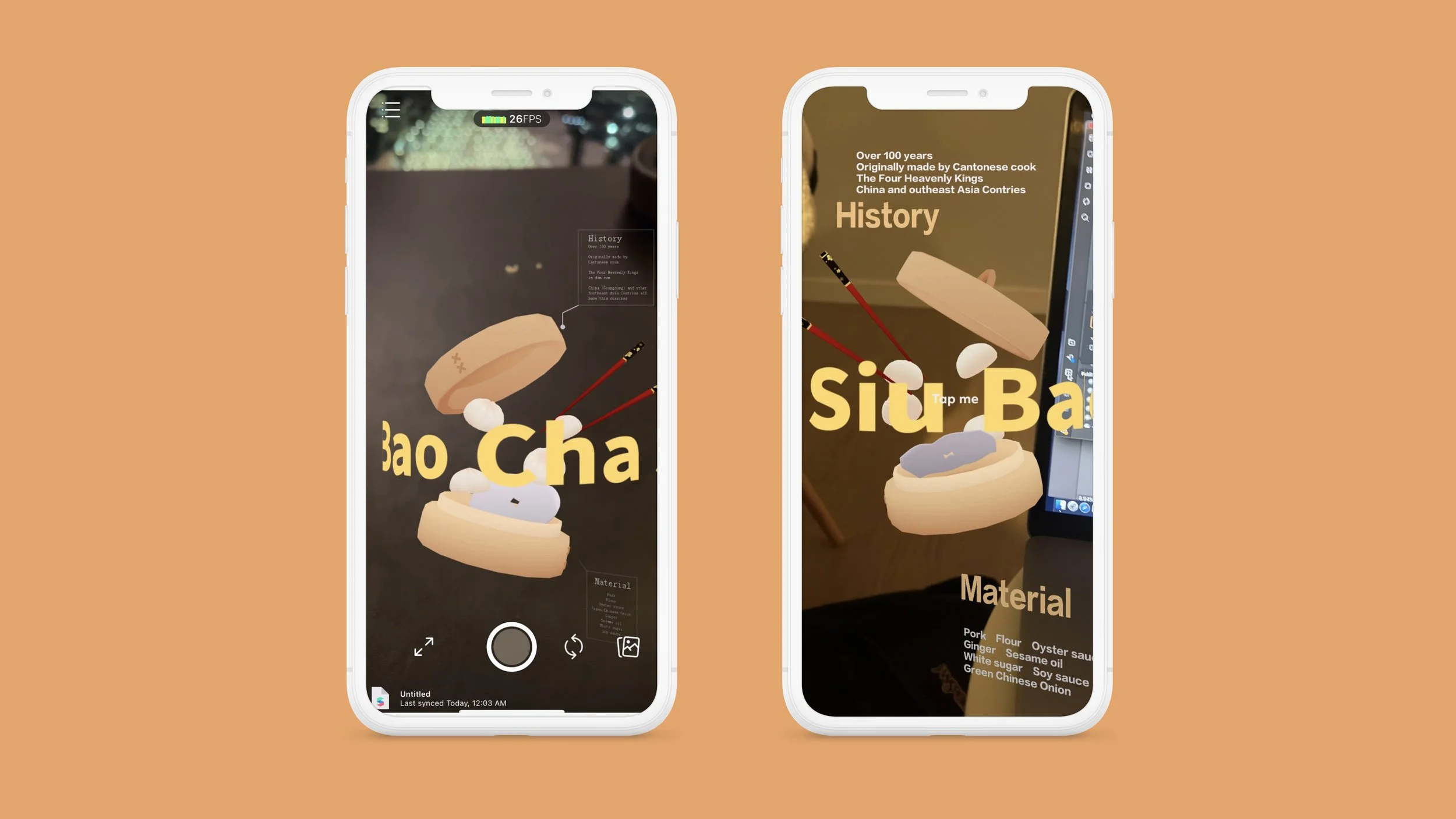
Sumsum is a mobile AR experience that offers users a new channel to learn about the Dimsum culture. It is designed to offer assistance when users visit Dim sum restaurants.
Initial thoughts
As a Chinese who grew up where Dim sum originated, I found it an indispensable part of my childhood. Food is in fact a marker of Chinese cultural identity, and it is one of the most direct ways for non-Chinese to know the culture overseas. What does food symbolize in the cultural aspect? How can misinterpretation in food impact a specific group? We think people in the States seem to have a rather vague understanding of the Dim sum culture, therefore, with the eagerness to know how non-Chinese view and understand Dim sum, we began our research in Chinatown and Dim sum restaurants.
Problem🔎
Lack of opportunities to learn about the difference between different Asian plates
Goal📍
Provide restaurant customers a new way of learning Dim sum culture
Interactive AR experience that stimulates interest
Research
Participant Observation—
Absence of Yum Cha culture
Cultural fusion in drinking habit
During our meal, we were surprised to see a table with two white males ordering beer while eating Dim Sum. We also realized that many foreign tables choose to have cold water instead of hot tea, indicating the difference in drinking habits between the West and East. This is a great example of cultural fusion.
Weakening the essence of Dim sum culture—Yum Cha
Giving a little background explanation, the practice of drinking tea while eating Dim Sum is a BIG part of the Dim Sum culture, in fact, the action of eating Dim Sum is called “Yum Cha” in Cantonese, which is directly translated as ‘drink tea’. So drinking tea should’ve been an indispensable part of Dim Sum culture, but this part has been greatly weakened in Dim Sum culture in the state.

In-person interview—
Non-Asian customers are willing to try new cuisines if they know what it is made of
Interests in new cuisines
Different from our assumption, non-Asian customers are actually willing to try out different dishes, including intestines.
Card sorting—
People's understanding of Dim Sum varies depending on their experience with Asian food
Uncertain about what can be defined as Dim sum
With the question How do people define Dim Sum? in mind, we selected a series of pictures including Dim sum and some Japanese & Korean dishes for participants to classify.
People's understanding of Dim Sum varies a lot and sometimes they are uncertain about their current knowledge in Dim Sum. To the participants, Asian and non-Asian food is easy to categorize, but there’s a blurry line between different types of Asian food.
Solution
Storyboard—
We decided to go with a mobile AR solution—allowing users to scan the menu and gain extra knowledge in specific types of Dim sum.
Prototyping—
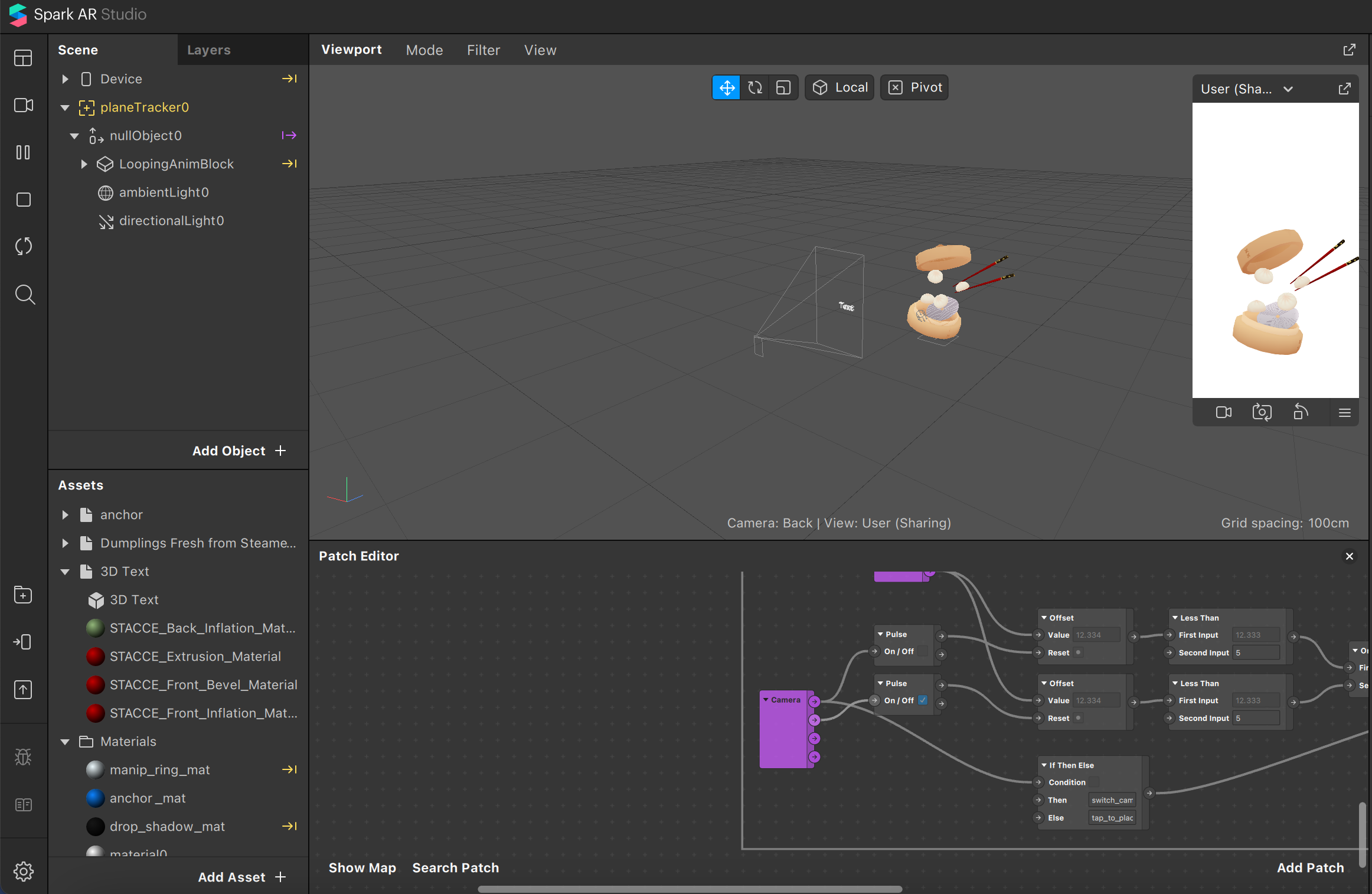
With SparkAR, we created an AR filter for Char Siu Bao (Pork bun). With just a few taps, users can gain knowledge in both the history of Pork bun and the material it is made of. The spinning 3D model also shows details of what the dish looks like.
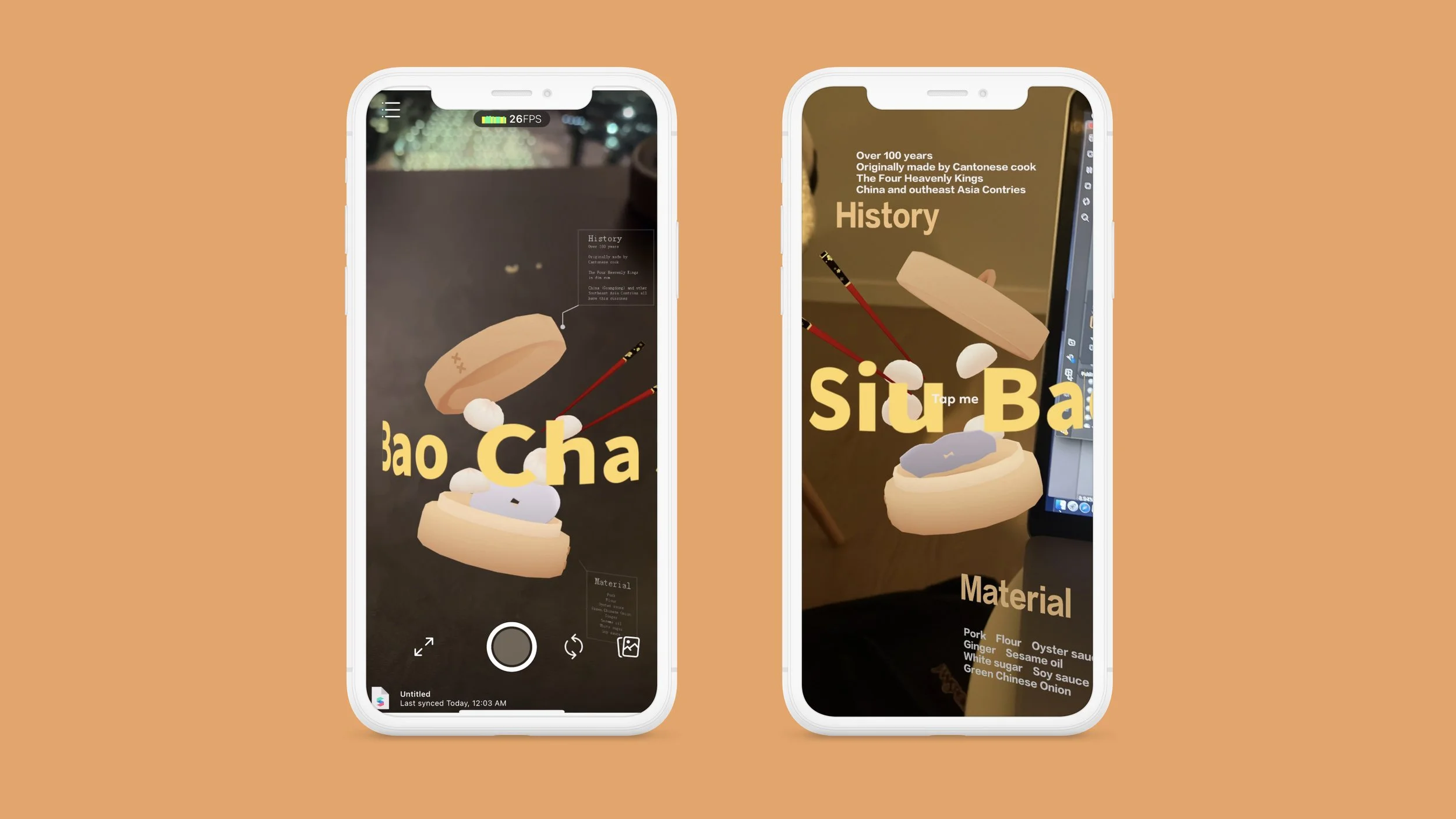
Video demo—
We set up a scene at my apartment and filmed a short demo video of how this product can be applied in real-life situations.